The Future of B2B Data: AI, Automation, and Compliance
How AI and automation are changing B2B data collection, and why compliance keeps that data trustworthy.
Read article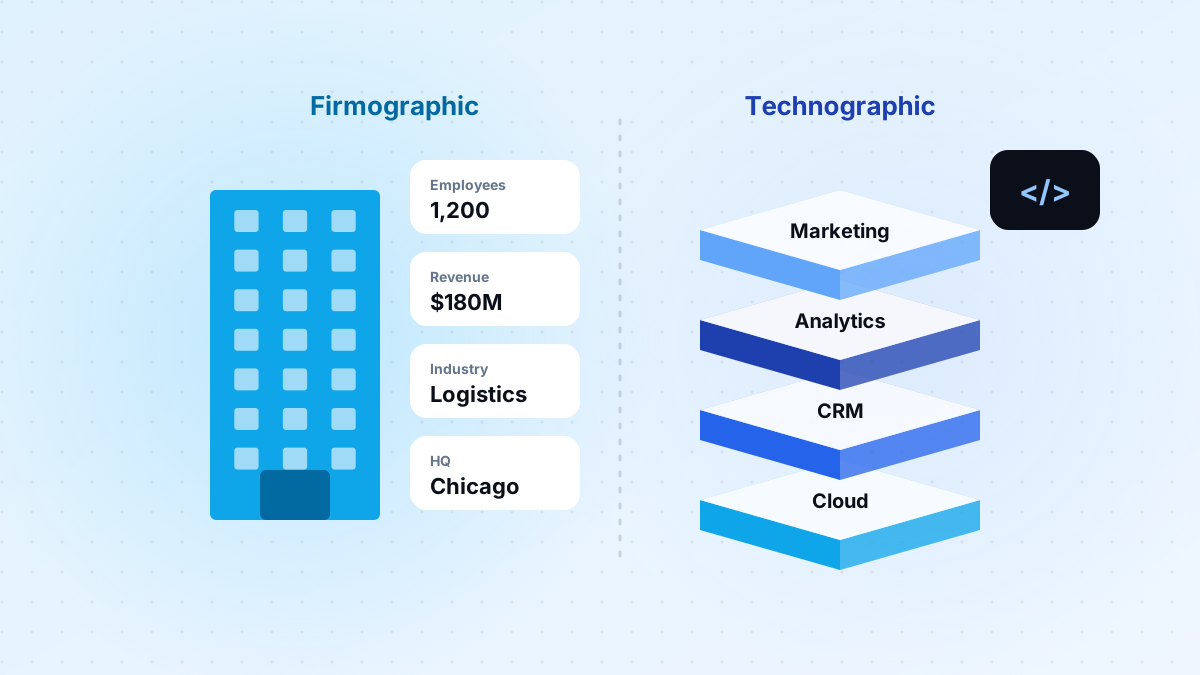
Firmographic and technographic data both describe a company, but they answer different questions. Confusing the two, or relying on only one, is a common reason target lists look good on paper but underperform in practice.
Firmographic data describes the shape of a business: industry, employee count, revenue, location, and legal structure. It is the data most B2B teams reach for first, because it is widely available and easy to filter on.
Its strength is narrowing a huge market down to a workable segment. Its weakness is that it says nothing about whether a company is actually ready to buy what you sell right now.
Technographic data describes what a company actually uses: their CRM, marketing stack, cloud provider, or other tools. It answers a sharper question than firmographics can: is this company already set up in a way that makes our product relevant, or even necessary?
Firmographics tell you who might be a fit. Technographics tell you whether the environment supports that fit right now. Used together, they let you prioritize a list instead of just filtering it.
A large, broadly relevant list with no sense of urgency or readiness.
A sharp, high-signal list that may be too narrow to hit volume targets.
A right-sized list where the top accounts are both a good fit and plausibly ready.
Start broad with firmographic filters to define your addressable market, then layer technographic signals on top to rank and prioritize within it. Treat the combination as a living filter, not a one-time export, since both a company's size and its tech stack change over time.
Related service
Custom-built, human-verified prospect lists mapped to your ideal customer profile. Accurate, verified, and up to date, so your team reaches the right people faster.
Keep reading
How AI and automation are changing B2B data collection, and why compliance keeps that data trustworthy.
Read articleWhy a curated B2B database and a raw contact list lead to very different outreach results.
Read articleWhat DUNS registration means for transparency, verification, and enterprise-grade data services.
Read articleAsk us anything
From list building to CRM cleanup, our researchers are happy to talk through what will work for you.
We use cookies to provide essential website functionality, improve your experience, understand website performance, and support our marketing activities.
You can choose which types of cookies you allow. Essential cookies cannot be disabled because they are required for the website to function properly.
These cookies are necessary for core website functions, security, navigation, and your cookie preferences.
These cookies help us understand how visitors use our website, such as which pages are visited and how users interact with our content. This helps us improve our website and services.
These cookies may be used to understand advertising and campaign performance and provide more relevant communications or content.
Locked off because your browser sent a privacy opt-out signal or you opted out of sale or sharing.
These cookies allow the website to remember certain preferences and provide enhanced functionality.
You can change your cookie preferences at any time through the Cookie Settings option on our website. For more information, please see our Cookie Policy and Privacy Policy.