What Is B2B Data Verification? A Practical Guide
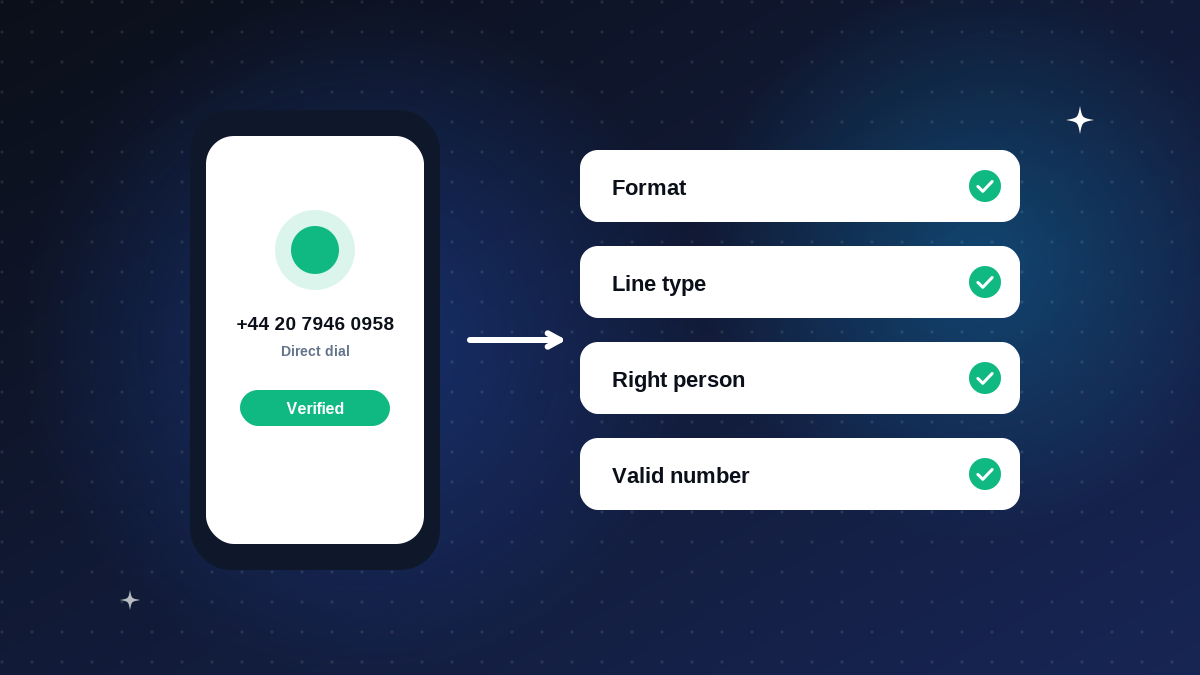
What B2B data verification means, which fields to check, how often to do it, and how it differs from data enrichment.
Read article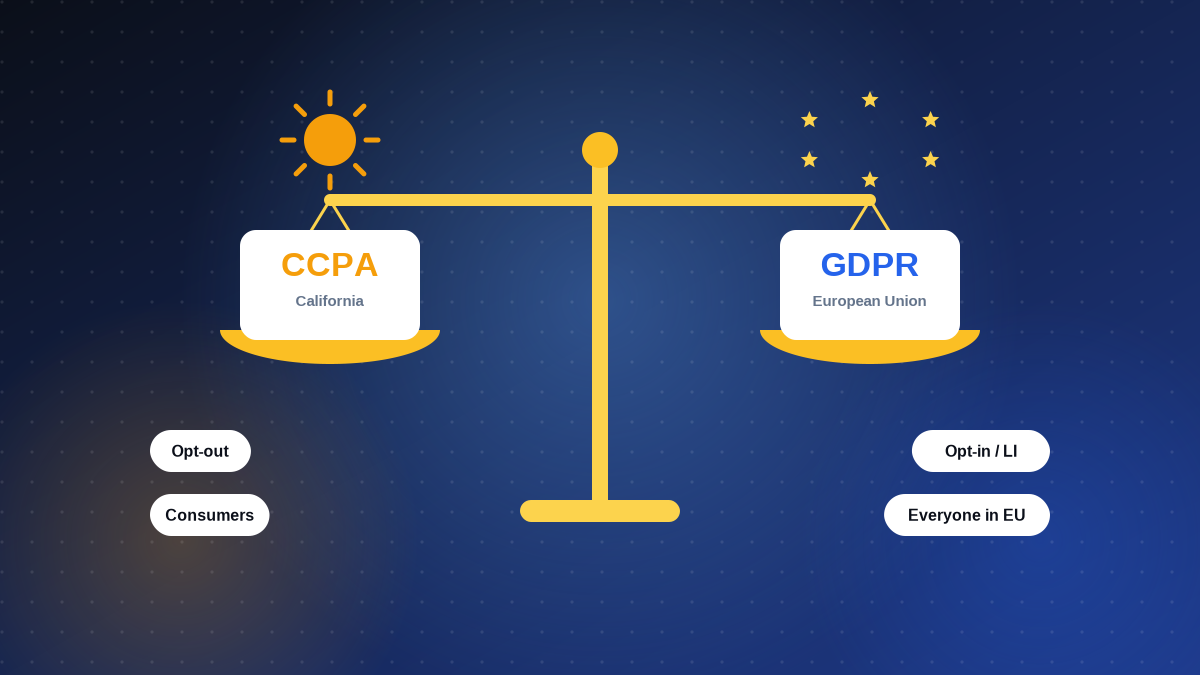
GDPR and CCPA are often mentioned in the same breath, but they are different laws with different requirements. If your outreach touches the EU and California, it is worth understanding where the two actually diverge. This is a general overview, not legal advice.
GDPR is a European Union regulation covering the personal data of people in the EU and UK, regardless of where the company processing that data is based. CCPA, and its expansion under CPRA, is a California state law focused on the rights of California residents specifically.
| GDPR | CCPA | |
|---|---|---|
| Scope | Personal data of people in the EU and UK | Personal data of California residents |
| Primary basis for processing | Requires a lawful basis, often legitimate interest or consent | Focused more on disclosure and opt-out rights than a lawful basis requirement |
| Core individual right | Broad rights including access, correction, deletion, and portability | Right to know, delete, and opt out of sale or sharing of data |
| Enforcement approach | Data protection authorities in each EU country, plus the UK ICO | California Privacy Protection Agency and state enforcement |
Many B2B teams build their internal data practices to the stricter of the two standards for the fields that overlap, so they are not maintaining two entirely separate playbooks depending on where a contact is located.
Read our GDPR statement and DPDP compliance page, or see how CRM data enrichment keeps records accurate.
Related service
Customer data decays over time. We validate, standardize, deduplicate, and enrich your CRM so your team engages the right people with the right details.
Keep reading
What B2B data verification means, which fields to check, how often to do it, and how it differs from data enrichment.
Read articleWhy B2B phone numbers go wrong, what a proper phone check covers, what valid, invalid and bounced mean, and how to keep call lists accurate.
Read articleWhat a good email bounce rate is, the difference between hard and soft bounces, and eight practical fixes to bring your bounce rate down.
Read articleAsk us anything
From list building to CRM cleanup, our researchers are happy to talk through what will work for you.
We use cookies to provide essential website functionality, improve your experience, understand website performance, and support our marketing activities.
You can choose which types of cookies you allow. Essential cookies cannot be disabled because they are required for the website to function properly.
These cookies are necessary for core website functions, security, navigation, and your cookie preferences.
These cookies help us understand how visitors use our website, such as which pages are visited and how users interact with our content. This helps us improve our website and services.
These cookies may be used to understand advertising and campaign performance and provide more relevant communications or content.
Locked off because your browser sent a privacy opt-out signal or you opted out of sale or sharing.
These cookies allow the website to remember certain preferences and provide enhanced functionality.
You can change your cookie preferences at any time through the Cookie Settings option on our website. For more information, please see our Cookie Policy and Privacy Policy.