Phone Number Verification for B2B: How to Keep Your Call Lists Accurate
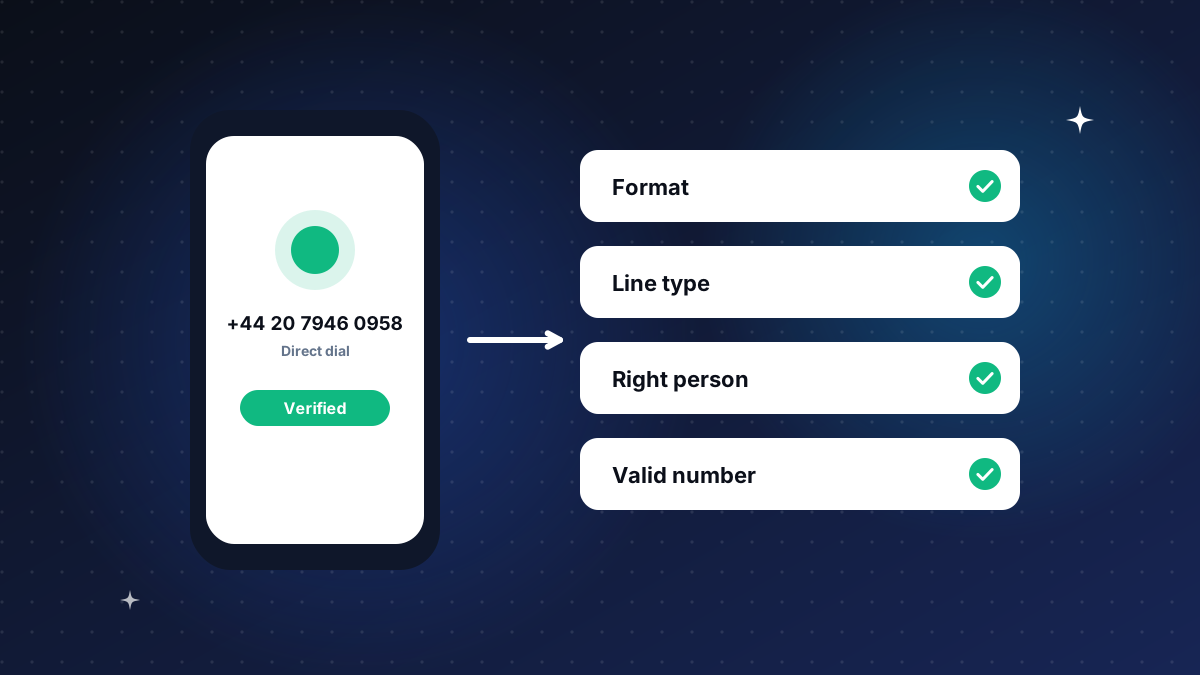
Why B2B phone numbers go wrong, what a proper phone check covers, what valid, invalid and bounced mean, and how to keep call lists accurate.
Read article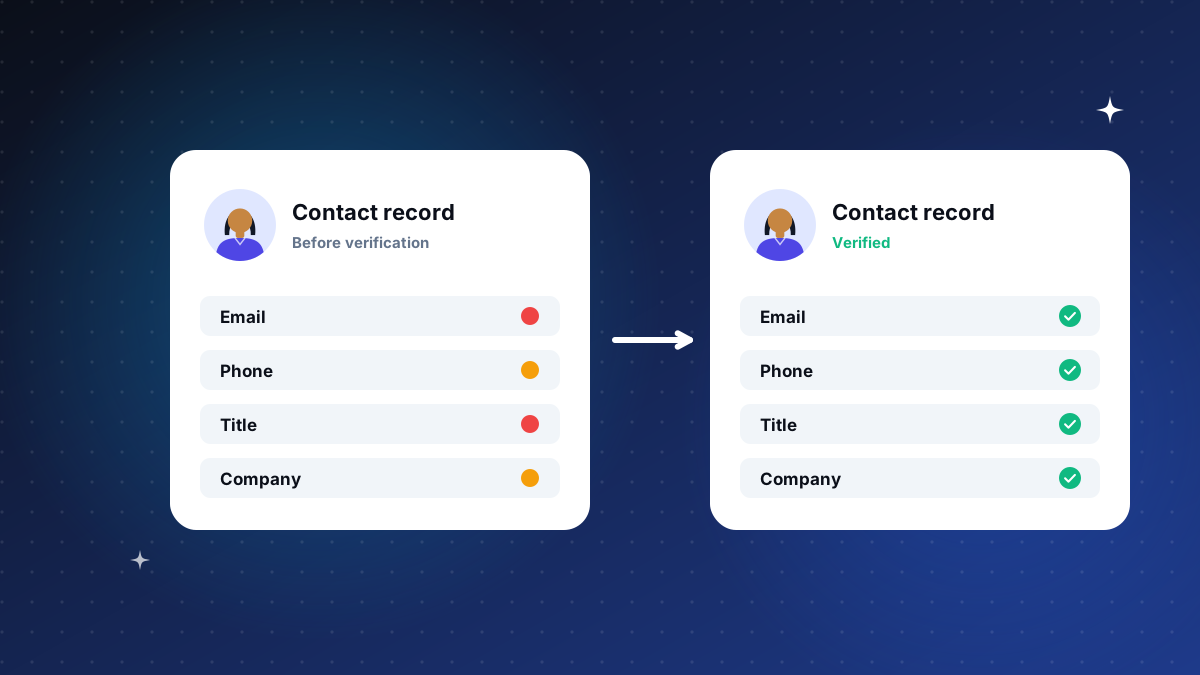
Every sales and marketing plan rests on one assumption: that the people in your data are real, still in their jobs and reachable on the details you hold. Data verification is how you check that assumption before you spend time and money on it.
B2B data verification is the process of checking that the business contact and company details you hold are correct and current. It answers simple questions for every record: does this email address work, does this phone number reach this person, and does this person still have this job at this company?
Verification does not add new information. That is data enrichment. Verification tests what you already have and tells you what to keep, fix or remove.
Business data decays faster than most teams expect. Estimates commonly put it at 20 to 30 percent of contact records every year.
Is it valid, risky or invalid? Bad addresses bounce and damage your sender reputation.
Is it a real number, in the right format, and does it reach the contact rather than a switchboard?
Is the person still at the company, and in the role you think?
Are the name, website, size, industry and location still correct?
| Process | What it does | When to use it |
|---|---|---|
| Verification | Checks existing details are correct and current | Before campaigns, after imports, every quarter |
| Enrichment | Adds missing details such as direct dials or titles | When records are incomplete |
| Cleansing | Fixes formats, merges duplicates, removes junk | Before migrations and as ongoing hygiene |
Verification tells you a contact is real. It does not give you permission to contact them. Make sure you have a lawful basis under laws such as GDPR and the DPDP Act, and respect opt-out requests.
Achivix offers data verification, including email verification and phone number verification, checked by human researchers.
Related service
Achivix data verification checks the details your team relies on: work emails, phone numbers, job titles and company information. You get a clear status on every record, so you only call and email people who are really there.
Keep reading
Why B2B phone numbers go wrong, what a proper phone check covers, what valid, invalid and bounced mean, and how to keep call lists accurate.
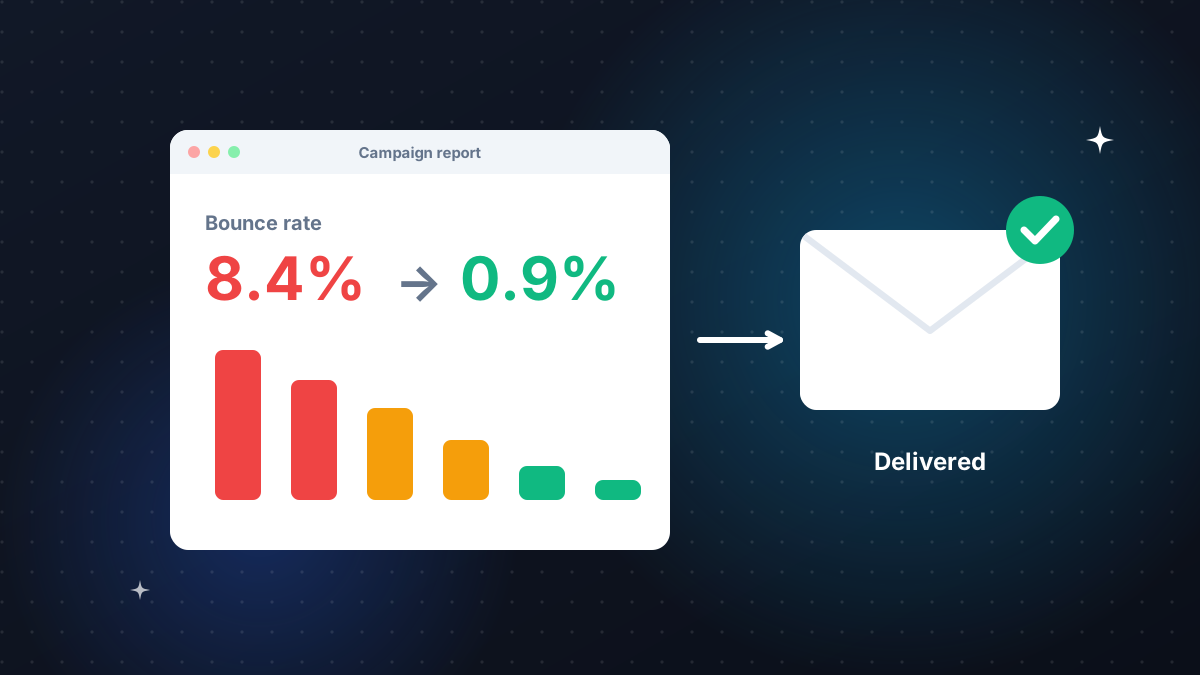
Read articleWhat a good email bounce rate is, the difference between hard and soft bounces, and eight practical fixes to bring your bounce rate down.
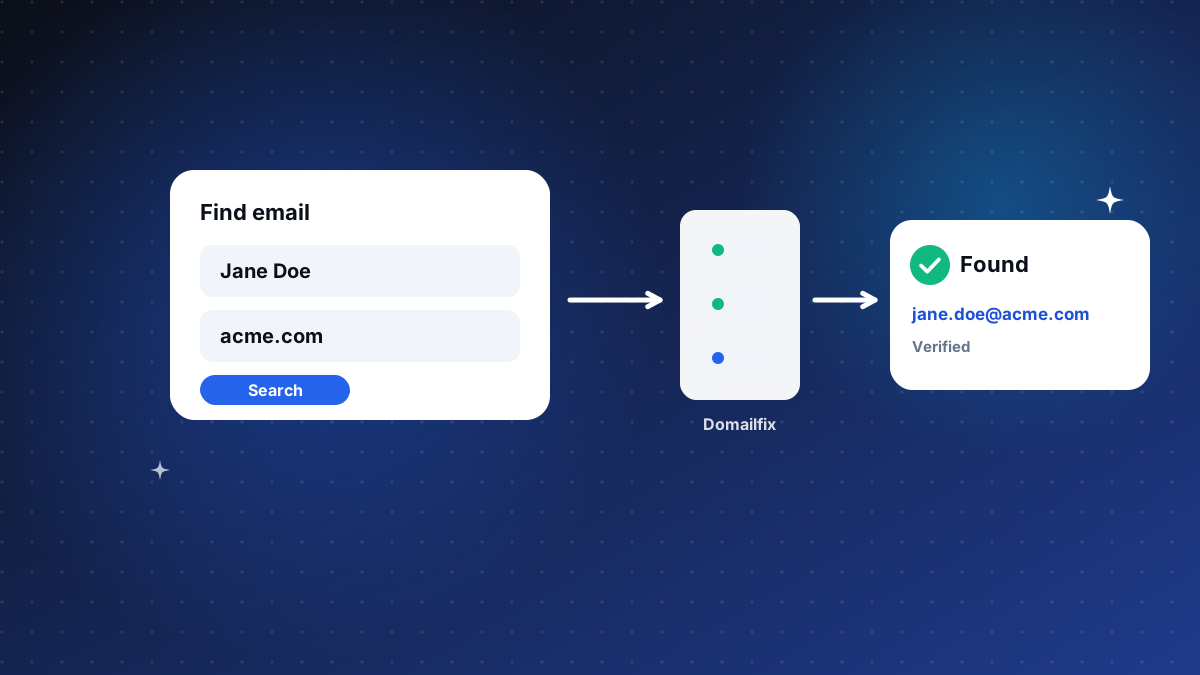
Read articleA practical way to find a person's work email from just their name and company website, and know it is confirmed rather than guessed.
Read articleAsk us anything
From list building to CRM cleanup, our researchers are happy to talk through what will work for you.
We use cookies to provide essential website functionality, improve your experience, understand website performance, and support our marketing activities.
You can choose which types of cookies you allow. Essential cookies cannot be disabled because they are required for the website to function properly.
These cookies are necessary for core website functions, security, navigation, and your cookie preferences.
These cookies help us understand how visitors use our website, such as which pages are visited and how users interact with our content. This helps us improve our website and services.
These cookies may be used to understand advertising and campaign performance and provide more relevant communications or content.
Locked off because your browser sent a privacy opt-out signal or you opted out of sale or sharing.
These cookies allow the website to remember certain preferences and provide enhanced functionality.
You can change your cookie preferences at any time through the Cookie Settings option on our website. For more information, please see our Cookie Policy and Privacy Policy.