The Future of B2B Data: AI, Automation, and Compliance
How AI and automation are changing B2B data collection, and why compliance keeps that data trustworthy.
Read article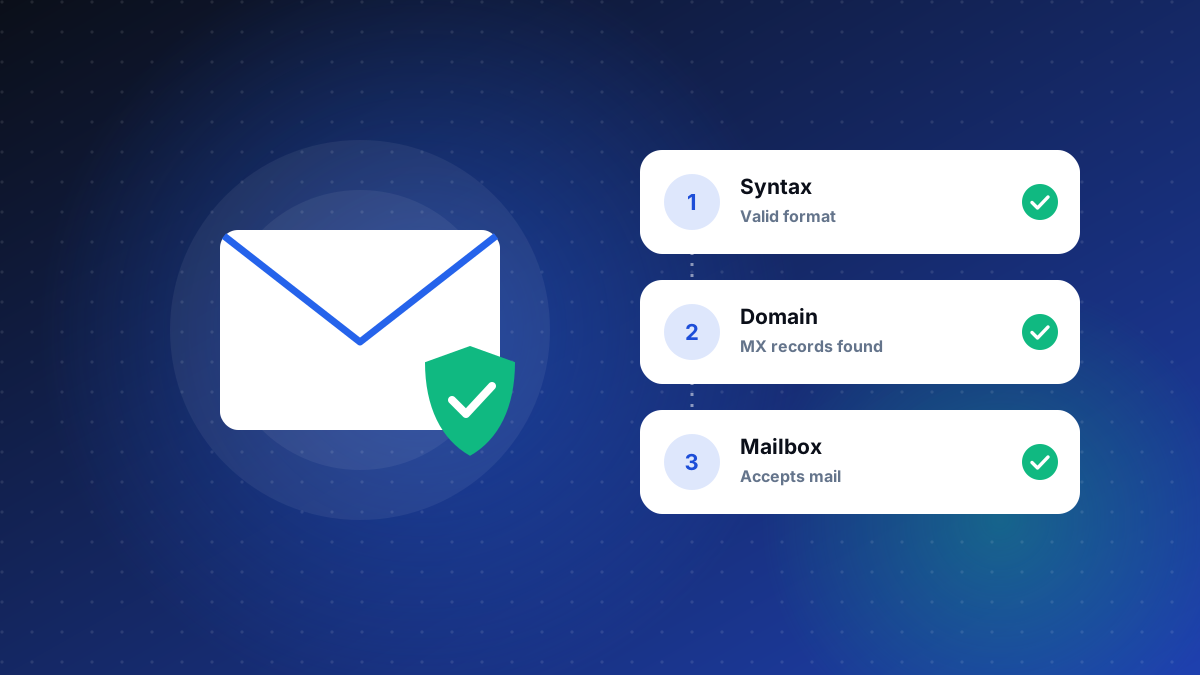
"Verified email" gets used loosely, but real email verification involves several distinct checks, each catching a different kind of problem. Understanding them helps you judge how reliable a verified list actually is.
The most basic check confirms an email address is formatted correctly: the right structure of characters, an @ symbol, and a valid-looking domain. It catches obvious typos but says nothing about whether the address actually exists.
This step confirms the domain itself is real and configured to receive mail, checking for valid mail server records. It rules out addresses at domains that do not exist or are not set up to receive email at all.
The deepest level of verification checks whether the specific mailbox exists on that domain, without actually sending a test email. This is the step that catches addresses where the domain is real but the specific person's account is not, often the case after someone leaves a company.
Catches typos, but a large share of invalid addresses will still pass.
Catches more, but individual departed or misspelled mailboxes can still slip through.
Catches the most, giving the most reliable signal before you send.
A list that has only passed a syntax check is meaningfully less reliable than one that has passed a full mailbox-level verification, even if both get labeled "verified."
Related service
Customer data decays over time. We validate, standardize, deduplicate, and enrich your CRM so your team engages the right people with the right details.
Keep reading
How AI and automation are changing B2B data collection, and why compliance keeps that data trustworthy.
Read articleWhy a curated B2B database and a raw contact list lead to very different outreach results.
Read articleWhat DUNS registration means for transparency, verification, and enterprise-grade data services.
Read articleAsk us anything
From list building to CRM cleanup, our researchers are happy to talk through what will work for you.
We use cookies to provide essential website functionality, improve your experience, understand website performance, and support our marketing activities.
You can choose which types of cookies you allow. Essential cookies cannot be disabled because they are required for the website to function properly.
These cookies are necessary for core website functions, security, navigation, and your cookie preferences.
These cookies help us understand how visitors use our website, such as which pages are visited and how users interact with our content. This helps us improve our website and services.
These cookies may be used to understand advertising and campaign performance and provide more relevant communications or content.
Locked off because your browser sent a privacy opt-out signal or you opted out of sale or sharing.
These cookies allow the website to remember certain preferences and provide enhanced functionality.
You can change your cookie preferences at any time through the Cookie Settings option on our website. For more information, please see our Cookie Policy and Privacy Policy.